

Does My Yard Need Regrading? 7 Signs to Check
A Florida downpour can tell you more about your yard in 20 minutes than a dry week ever will. If water collects near the house, turns part of the lawn into mud, or leaves you unable to use an outdoor area after every storm, you may be asking, does my yard need regrading? In many cases, the answer comes down to whether the land is directing water where it should go - away from structures, walkways, and low-use areas.
Regrading is not simply making a yard look flatter or smoother. It is the process of adjusting the soil elevation and slope so water can move safely across the property. Done correctly, it can protect your foundation, improve lawn health, reduce erosion, and make more of your outdoor space usable.
What Yard Regrading Actually Solves
Every property needs a plan for rainwater. In Central Florida, that plan has to account for intense storms, sandy soils, flat lots, high water tables, and homes built close to neighboring properties. A yard can appear level to the eye but still have low spots or subtle slopes that push runoff back toward the home.
Regrading changes the contours of the site. Soil may be removed from high areas, added to low areas, compacted where needed, and shaped to create a controlled path for water. Depending on the property, grading work may also need to work alongside drainage swales, catch basins, French drains, downspout extensions, or other drainage features.
The goal is not to send water onto a neighbor's property or simply move a puddle from one corner of the yard to another. The goal is to create positive drainage: water should move away from the house and toward an appropriate outlet or drainage area.
Does My Yard Need Regrading? 7 Signs to Check
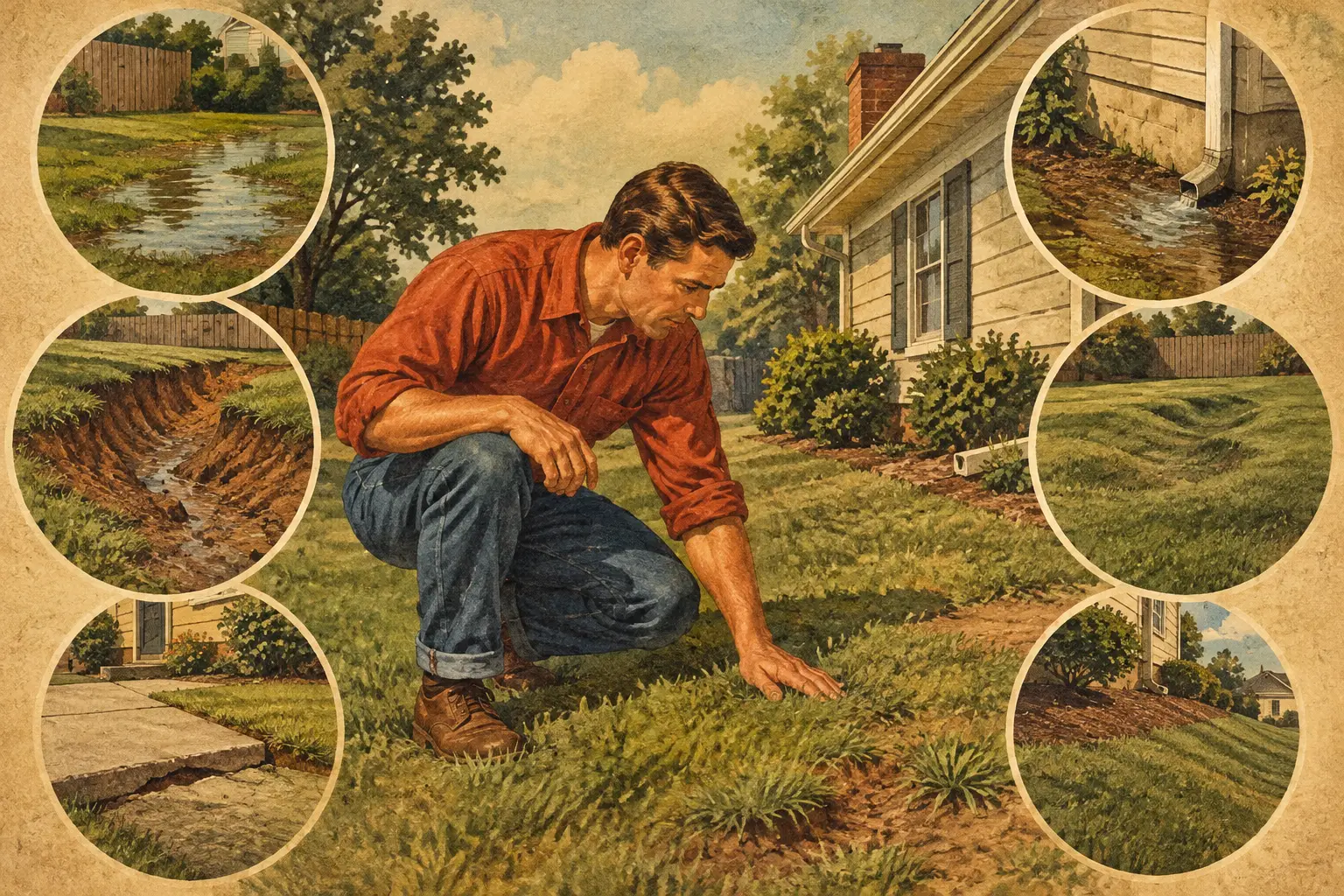
1. Water pools near the foundation
Standing water next to your home is one of the clearest warning signs. After a normal rain, small puddles may take a little time to disappear. But water that repeatedly sits against the foundation, along exterior walls, or beside patios deserves attention.
Over time, concentrated moisture can contribute to soil movement, pest activity, moisture intrusion, and damage to landscaping. Grading near the home should generally carry water away from the structure, not trap it there.
2. Puddles stay in the lawn for more than a day or two
A low spot in the middle of the yard may seem like a minor inconvenience until grass thins out, the ground becomes soft, and mowing turns into a mess. If puddles remain well after rain has stopped, the problem may be a depression in the grade, compacted soil, poor drainage, or a combination of all three.
Regrading may be the right fix when the area needs to be raised or reshaped. If the soil is already correctly sloped but cannot absorb or carry water effectively, a drainage solution may be needed instead. A site assessment helps separate these issues before work begins.
3. Your yard slopes toward the house
This can happen after construction, landscaping work, erosion, or years of adding mulch and topsoil near the home. It may also be present from the day the property was built. A slope toward the house gives stormwater an easy route to the foundation.
Look along the perimeter after rainfall. Are water trails, wet soil, or washed mulch consistently moving toward the walls? If so, grade correction should be considered before the problem becomes more costly.
4. Soil and mulch wash away during storms
Erosion is not just a cosmetic issue. When soil moves, the shape of the yard changes, plant roots can become exposed, and water paths become less predictable. You may notice mulch collecting at the edge of a bed, bare spots appearing on a slope, or sediment building up near a fence, patio, or drain.
Regrading can reduce the speed and direction of runoff. In some cases, the solution also includes stabilizing a slope, improving plant coverage, or adding a drainage feature that relieves pressure during heavy rain.
5. Grass struggles in the same wet areas
Lawns need water, but turf that stays saturated cannot develop a healthy root system. Yellowing grass, bare patches, mossy growth, and repeated rutting are common signs that a section of lawn is holding too much moisture.
Before replacing sod, identify why the grass failed. New sod placed in the same low, wet area will often struggle again. Correcting the grade first gives landscaping a much better chance to establish and last.
6. Walkways, patios, or pavers are settling unevenly
When water repeatedly moves beneath or alongside hardscape, it can carry soil away and weaken the base supporting pavers, concrete edges, or walkways. You might see sunken pavers, cracks, gaps, or a patio that seems to direct water back toward the home.
Not every hardscape issue requires a full-yard regrade. Sometimes the affected area can be corrected locally. Still, it is worth looking at the larger water flow pattern so the repair is not undermined by the same drainage problem later.
7. You avoid part of the yard after it rains
A yard should not lose half its usable space every time Central Florida gets a storm. If a side yard stays muddy, a gate area becomes impassable, or a backyard remains soggy long after rain, the layout of the land may be working against you.
Regrading can turn a problem area into usable ground for lawn, planting beds, access paths, play space, or outdoor living. The right approach depends on where the water originates and where it can safely go.
Regrading vs. Drainage: Which One Do You Need?
Grading and drainage often work together, but they are not interchangeable. Regrading manages water at the surface by changing the slope of the land. Drainage systems collect, redirect, or disperse water when surface grading alone cannot handle the volume or site conditions.
For example, a shallow backyard low spot may be corrected by adding and shaping soil. A narrow side yard between homes may not have enough room to create a meaningful slope, so a French drain or catch basin could be a better fit. A property with roof runoff dumping near the foundation may need downspout improvements in addition to grading.
The best answer is rarely a one-size-fits-all fix. A contractor should look at the elevation around the home, existing drainage routes, roof runoff, soil conditions, nearby lots, and the way water behaves during or after rain. An honest assessment may find that a small correction solves the issue, or it may show that grading alone would only mask a larger drainage problem.
What a Proper Regrading Project Involves
A lasting grade correction starts with a property assessment, not a truckload of fill dirt. Adding soil without a plan can create new problems, including water trapped against the home, buried drainage paths, or a slope that sends runoff toward a neighbor.
The work typically begins by identifying high and low points and determining the desired drainage path. The crew then removes, redistributes, or brings in suitable material to build the needed elevations. Soil is shaped and compacted as appropriate, with care taken around foundations, utilities, irrigation, trees, and existing landscape features.
Once the grade is corrected, the surface should be finished for its intended use. That may include sod, seed, mulch beds, gravel, or another landscape treatment. If drains or swales are part of the design, they should be installed or adjusted before final landscape restoration.
Why DIY Regrading Can Create Bigger Problems
Small touch-ups are one thing. Raising or reshaping areas close to a house is another. The challenge is not moving dirt - it is understanding water flow, final elevations, compaction, and where runoff will go during a heavy storm.
Common mistakes include piling soil against siding, covering weep holes, blocking existing drainage routes, creating a new low spot, or sending water toward an adjacent property. Florida's frequent rain can expose these errors quickly.
A professional evaluation is especially worthwhile if you have foundation-adjacent pooling, recurring saturation, erosion, a retaining issue, or a property with limited drainage options. The right repair protects both the visible landscape and the parts of the property you do not want water reaching.
If your yard is repeatedly telling you where water does not belong, listen before the next storm makes the problem worse. A&W Outdoors can assess the site, explain what is causing the issue, and recommend a practical path toward drier ground, healthier landscaping, and a property that functions the way it should.
Comments