

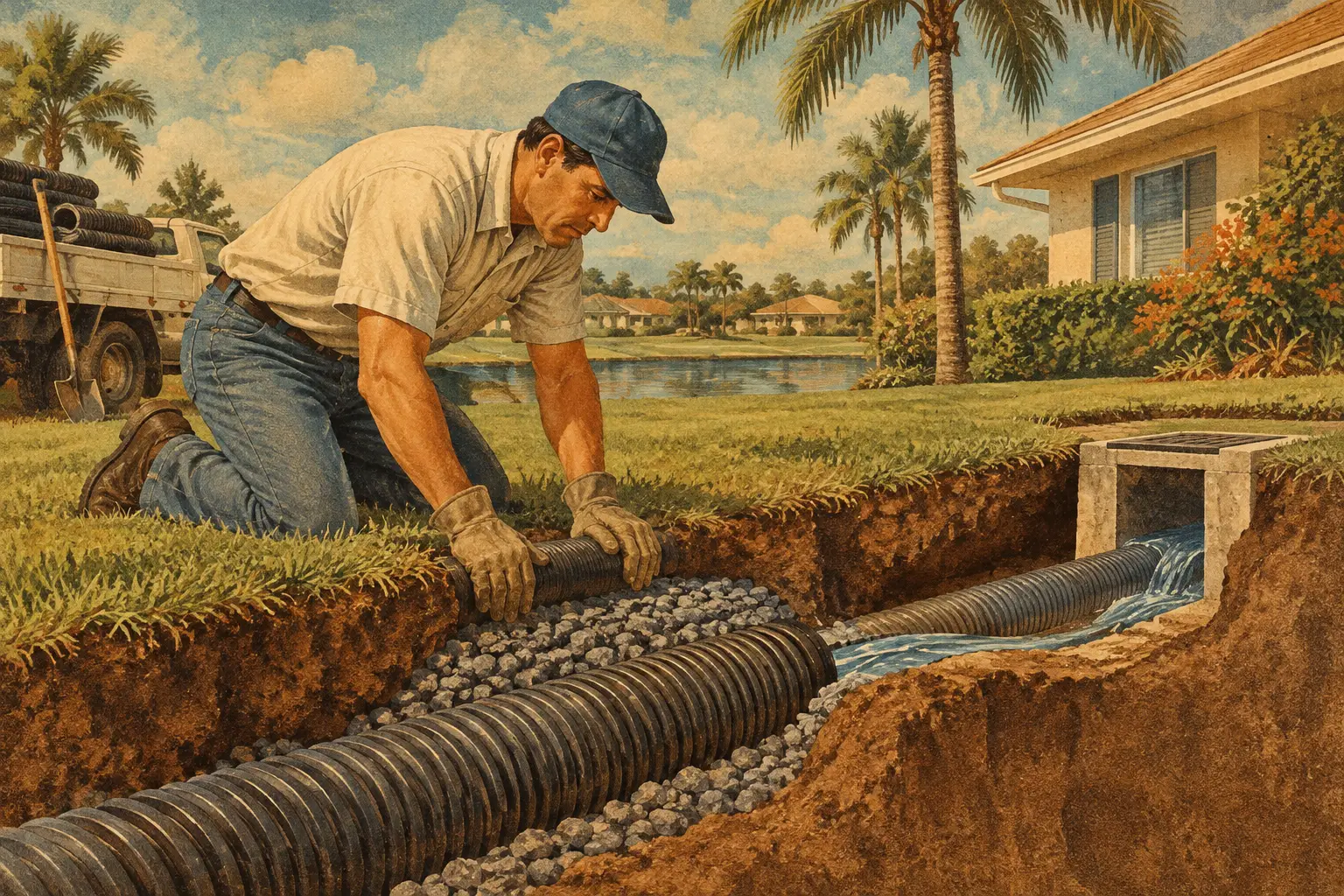
What a Central Florida Drainage Contractor Fixes
A wet spot in the yard after a Florida afternoon storm is normal. Water still sitting near the house, pooling around a patio, or turning grass into mud days later is a property problem. A Central Florida drainage contractor looks beyond the puddle to find out why water is not moving where it should - then corrects the grade, drainage path, or soil conditions causing it.
For homeowners, property managers, and general contractors, the goal is not simply to make a yard look better after rain. The goal is to protect the home, preserve usable outdoor space, reduce landscape damage, and keep the property functioning as intended.
Why Drainage Problems Are Common in Central Florida
Central Florida gets heavy rainfall, fast-moving summer storms, and periods of high groundwater. Those conditions can expose problems that were easy to miss during dry weather. A yard may look level, but even a small low area can hold water. A downspout may empty beside the foundation. A new patio, pool deck, fence line, or landscape bed may interrupt the natural route water once followed.
Florida soil adds another layer to the problem. Many properties have sandy soils that drain quickly in some areas, while compacted fill, clay pockets, construction debris, or a high water table can slow drainage elsewhere. That is why the same drainage product does not work for every property. A French drain may help one yard, while another needs regrading, surface drainage, or a better outlet for roof runoff.
Poor drainage can lead to more than an unpleasant lawn. Standing water weakens turf, encourages mosquitoes, damages mulch beds, creates slippery walkways, and can wash soil away from hardscape edges. If water repeatedly collects near the structure, it can also raise concerns around the foundation, exterior walls, and slab area.
Signs You Need a Central Florida Drainage Contractor
Some drainage issues are obvious after the first major storm. Others develop slowly and show up as repeated maintenance headaches. If you regularly see water pooling close to the home, bare or thinning grass in low spots, erosion along a fence or patio, or mulch washing out of beds, it is worth having the property assessed.
Pay attention to how long water remains after rainfall. A shallow puddle that disappears within a few hours may not require construction work. Water that remains for a day or more, returns after every storm, or makes parts of the yard unusable usually points to a drainage or grading issue that needs a real solution.
Commercial and managed properties may also have safety and appearance concerns. Wet walkways, washed-out common areas, muddy entrances, and water collecting near parking or dumpster pads can create ongoing complaints. Addressing the water flow at the source is often more practical than repeatedly repairing the visible damage.
The First Question Is Where Is the Water Coming From?
A good drainage plan starts with observation, not a one-size-fits-all recommendation. During an on-site assessment, the contractor should evaluate the property’s slope, low points, roof runoff, existing drains, hardscape elevations, landscape layout, and available discharge areas.
Water may be coming from the roof, a neighboring lot, an uphill portion of the yard, an irrigation issue, or a combination of factors. It can also be trapped because the property has no clear path for surface water to leave. Installing a drain without understanding that path can move the problem a few feet instead of solving it.
The outlet matters just as much as the collection point. Drainage water needs an approved place to go, such as a suitable swale, drainage area, catch basin, or other permitted discharge location. The best approach depends on the property layout, local conditions, and how much water must be managed during a heavy storm.
Grading Often Does the Most Important Work
Many property owners assume drainage means buried pipe. Pipe can be useful, but proper grading is often the foundation of effective water management. Grading shapes the land so surface water naturally moves away from the home and out of problem areas.
A corrected grade may involve filling low spots, removing excess soil, rebuilding a swale, or adjusting the transition between lawn, patio, driveway, and landscape beds. The work needs to be planned carefully. Raising an area too much can send water toward a neighbor, affect a fence line, or create a new low spot somewhere else.
This is where local experience matters. A contractor should consider the way water moves across the full property, not just the place where it is currently pooling. The right grade protects the home while keeping the yard practical for mowing, planting, walking, and everyday use.
When a French Drain Makes Sense
A French drain is typically a trench containing gravel and perforated pipe that collects subsurface water and directs it toward an outlet. It can be a strong option where water is saturating soil below the surface, collecting along a foundation edge, or gathering in a persistently wet area that cannot be corrected through grading alone.
It is not automatically the answer to every puddle. If runoff is flowing across the surface during storms, a swale, catch basin, channel drain, or grade correction may be more effective. If the outlet is poor, adding a French drain may simply create a pipe full of water with nowhere useful to discharge it.
Surface Drains and Downspout Extensions
Surface drains, such as catch basins and area drains, are designed to collect water that is visibly moving across the ground. They are often used at low points near patios, pool decks, driveways, walkways, or landscape areas. Connected piping carries that water to an appropriate discharge location.
Downspout extensions can also make a meaningful difference. Roof runoff concentrated at one corner of the home can overwhelm a small area of turf and create erosion near the foundation. Directing that water away from the structure and into a planned drainage route helps protect both the house and the landscape.
Drainage Work Should Protect the Landscape Too
Functional drainage does not have to leave a property looking like a construction site. Once grade corrections and drainage components are installed, the disturbed areas should be restored with a practical plan for soil, sod, mulch, or landscape material.
That said, appearance should not override performance. A perfectly edged bed that traps water against the house is not a successful installation. The best exterior work balances curb appeal with water flow, healthy plant material, and a yard that can be used after rain.
For example, decorative rock may help control erosion in a specific drainage path, but it is not a fix for poor grading on its own. New sod can improve the look of a repaired yard, but it will struggle if the low spot beneath it is still holding water. Lasting results come from correcting the cause before restoring the finish.
What to Expect From a Straightforward Assessment
An honest contractor should explain what is causing the issue, what work is recommended, and what result the work is intended to achieve. You should also hear about limitations. On some properties, extreme storms may still leave temporary standing water because rainfall exceeds what any residential drainage system can move at once. The objective is to improve drainage time, direct water safely, and prevent repeated damage under normal storm conditions.
Ask whether the proposal includes grading, drainage materials, discharge routing, restoration, and cleanup. If the work affects irrigation, landscaping, fencing, concrete, or utility areas, those details should be discussed before construction begins. Clear communication up front helps avoid surprises once the work is underway.
A&W Outdoors approaches drainage as part of overall property protection. That may mean combining drainage installation with land leveling, site preparation, or landscape restoration so the finished property works as good as it looks.
Fix the Water Path Before the Damage Spreads
Waiting on a drainage issue can turn a manageable repair into repeated lawn replacement, erosion control, and exterior maintenance. If a section of your property stays wet after every storm, take photos during and after rainfall, note where the water starts, and schedule an on-site assessment while the problem is clear.
The right solution is not always the biggest one. It is the one that gives water a reliable path away from the areas you need to protect, so your yard, landscape, and outdoor space can recover and stay usable.
Comments