

When a Yard Grading Contractor Is Worth It
A yard that stays wet after every storm is not just an inconvenience. In Central Florida, frequent rain, flat lots, sandy soils, and fast-moving runoff can turn a low spot into a muddy mess, wash mulch out of beds, weaken turf, and send water toward the house. A qualified yard grading contractor looks past the visible puddle to find out why water is collecting there and what needs to change for it to drain correctly.
The right grading work can make a property more usable, protect landscaping, and reduce the risk of moisture problems near the foundation. But not every uneven lawn needs heavy equipment or a major regrade. The key is knowing when a simple landscape adjustment is enough and when the slope of the land is creating a larger problem.
What Yard Grading Actually Does
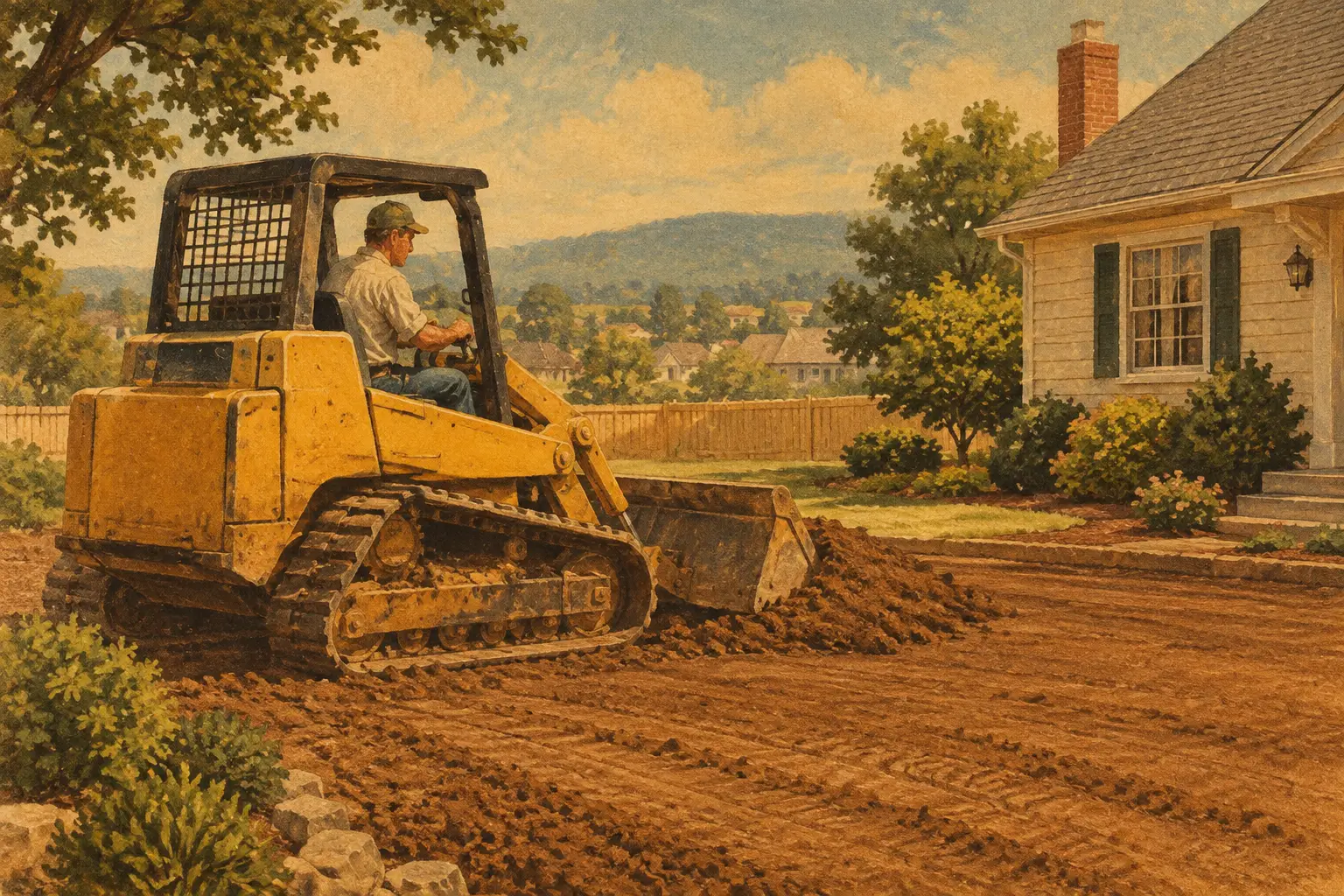
Yard grading is the process of shaping the soil so water moves where it should. That may mean raising a low area, smoothing an uneven section of lawn, creating a gentle slope away from a structure, or preparing the ground for drainage features and new landscaping.
On a properly graded property, rainwater has a planned path. It should move away from the home and other structures, avoid pooling in lawn areas, and reach an appropriate discharge point without creating trouble for neighboring properties. The goal is not always to make a yard perfectly flat. In fact, a completely flat yard often holds water. Good grading creates subtle elevations that support drainage while still looking natural and working for the way the property is used.
For homeowners, the results may be as straightforward as being able to walk through the yard after a storm without sinking into wet ground. For property managers and general contractors, proper grading can help prevent recurring maintenance calls, damaged landscape beds, slippery common areas, and site-preparation delays.
Signs You Need a Yard Grading Contractor
Some drainage concerns are obvious. Others show up slowly as a lawn that never quite recovers or a landscape bed that keeps washing out. If water remains in the same areas for more than a day or two after normal rainfall, the property may need more than routine lawn care.
A grade correction is often worth considering when you notice water collecting next to the foundation, downspouts dumping into low areas, bare spots where runoff has stripped away soil, or turf that stays soft and saturated. Cracked walkways, shifting pavers, eroded edges around driveways, and mulch repeatedly washing into the lawn can also point to poor water movement.
Pay attention to the pattern, not just one storm. A short period of standing water after an unusually heavy Florida downpour may be expected. Water that returns to the same location during ordinary rain is different. That is usually a sign that the existing slope, soil elevation, drainage path, or combination of all three is not doing its job.
Foundation-side water deserves quick attention
The ground around a home should generally direct water away from the structure. When soil settles near the foundation or a nearby bed becomes a basin, rain can stay against the house longer than it should. Grading may be used to restore the slope, but it may also need to work alongside gutters, downspout extensions, swales, or drainage systems.
There is no one-size-fits-all fix. The right solution depends on the home’s elevation, roof runoff, lot layout, existing drainage, and where water can safely go.
Why Florida Yards Need a Local Assessment
Central Florida properties have drainage challenges that are easy to underestimate. Many lots are relatively flat, and heavy rain can arrive quickly. Sandy soil may drain well in one section of a yard while compacted fill, buried debris, or a low clay layer causes water to linger somewhere else.
New construction can create its own issues. Equipment traffic compacts soil, final elevations may change after landscaping is installed, and neighboring lots can affect how water moves across a property. Older homes can develop problems as soil settles, trees are removed, patios are added, or landscape beds are built up over time.
That is why a visual inspection matters. A contractor should look at the overall property, not just the puddle. Where does the water begin? What happens when it reaches the low spot? Is runoff coming from the roof, a neighboring elevation, a hardscape surface, or an improperly placed drain outlet? Is there room to regrade naturally, or does the yard need a drainage system to carry water through or around a problem area?
An honest assessment may find that grading alone will solve the issue. It may also show that grading without drainage would only move the water a few feet and create a new low spot somewhere else.
Grading and Drainage Often Work Better Together
A common mistake is treating grading and drainage as separate problems. On many properties, they are part of the same solution.
For example, a contractor may reshape a backyard so surface water flows toward a swale, then install a French drain where groundwater or trapped runoff needs additional help. A low landscape bed may need fresh soil and a corrected elevation, while roof runoff may need to be redirected away from that bed. A patio area may need a small grade adjustment so water reaches a drain instead of flowing back toward the home.
French drains, catch basins, channel drains, and drain pipe all have a purpose, but they are not automatic answers. Installing a drain in a yard with the wrong slope can leave the system overloaded or unable to collect the water effectively. Likewise, regrading a property without considering discharge can send water toward fencing, a neighboring lot, or another vulnerable area.
A practical plan accounts for both surface water and subsurface water. It also considers the finished look of the property. The best result should improve function without leaving the yard looking like a construction site once the work is complete.
What to Expect From the Grading Process
A dependable yard grading project starts with an on-site assessment. The contractor should ask when the problem occurs, how long water remains, and whether the issue has changed over time. Photos from storms can be useful, especially when the property is dry on the day of the visit.
Next comes a clear plan. You should understand what areas will be adjusted, whether soil will be added or removed, how the finished grade will direct water, and whether drainage components are recommended. For larger projects, ask how access, existing plants, irrigation, fencing, and hardscape will be handled.
The work itself may involve stripping or protecting turf, moving soil, compacting and shaping the new grade, and restoring the surface with sod, seed, mulch, or landscaping as needed. The exact approach depends on the property and the time of year. Freshly graded soil and new sod need proper watering and time to establish, but that does not mean the drainage design should be ignored until later. The water path should be addressed as part of the project from the start.
Questions to Ask Before Hiring
Before choosing a yard grading contractor, ask how they determine the source of the water problem. A contractor who only recommends adding fill without examining runoff, downspouts, and surrounding elevations may be addressing the symptom instead of the cause.
It also helps to ask where the water will go after the grade is corrected. The answer should be specific and practical. Ask whether the work includes restoring disturbed lawn areas, how utilities or irrigation will be protected, and what site conditions could change the scope. Clear communication before work begins prevents surprises later.
Price matters, but the lowest estimate is not always the best value. A quick load of soil may make a low spot look better for a season, then settle and return to the same problem. Quality grading is measured by long-term water flow, not by how smooth the yard looks on the day the equipment leaves.
A Better Yard Starts With the Right Water Plan
When water has nowhere to go, it will find the weakest point in the property. That might be a soggy lawn, a washed-out bed, a patio edge, or the soil next to the home. Addressing the grade early can prevent a frustrating problem from becoming a larger repair.
A&W Outdoors helps Central Florida property owners assess what is happening on the ground, identify practical options, and complete grading and drainage work that supports a healthier, more usable property. The first step is simple: have the yard evaluated before another rainy season makes the same problem harder to ignore.
Comments